Ishizaka Inc. and Idea Studio Nepal Launches Full-Scale Waste Recycling Business in Nepal
MOU with the Kirtipur Municipality and Tribhuvan University Establishes an Government-Academia- Industry Partnership
Advancing Technology Verification, Waste Sorting Improvements, and Expert Exchange toward Recycling Plant Establishment
Since signing an MOU with Idea Studio Nepal (hereinafter referred to as ISN) in April 2024, Ishizaka Inc. has been working towards establishing a “Zero Waste Design Waste Recycling Plant” in Nepal.
Following this, in June 2025, the project was selected for the “FY2025 Project to Promote the Commercialization of Japan’s Circular Economy Overseas” by the Public Interest Incorporated Foundation Waste and 3R Research Foundation, and as demonstration study is being conducted under the “Zero Waste Design Waste Recycling Project in Kathmandu Valley and Kirtipur Municipality.”
With the signing of new MOUs in June 2025 with Tribhuvan University (*1) and in November 2025 with the Kirtipur Municipality (*2)—the planned site for the plant—a Public-Private Partnership (PPP) (*3) framework has been established, and the waste recycling project is now set to beginning in full earnest.
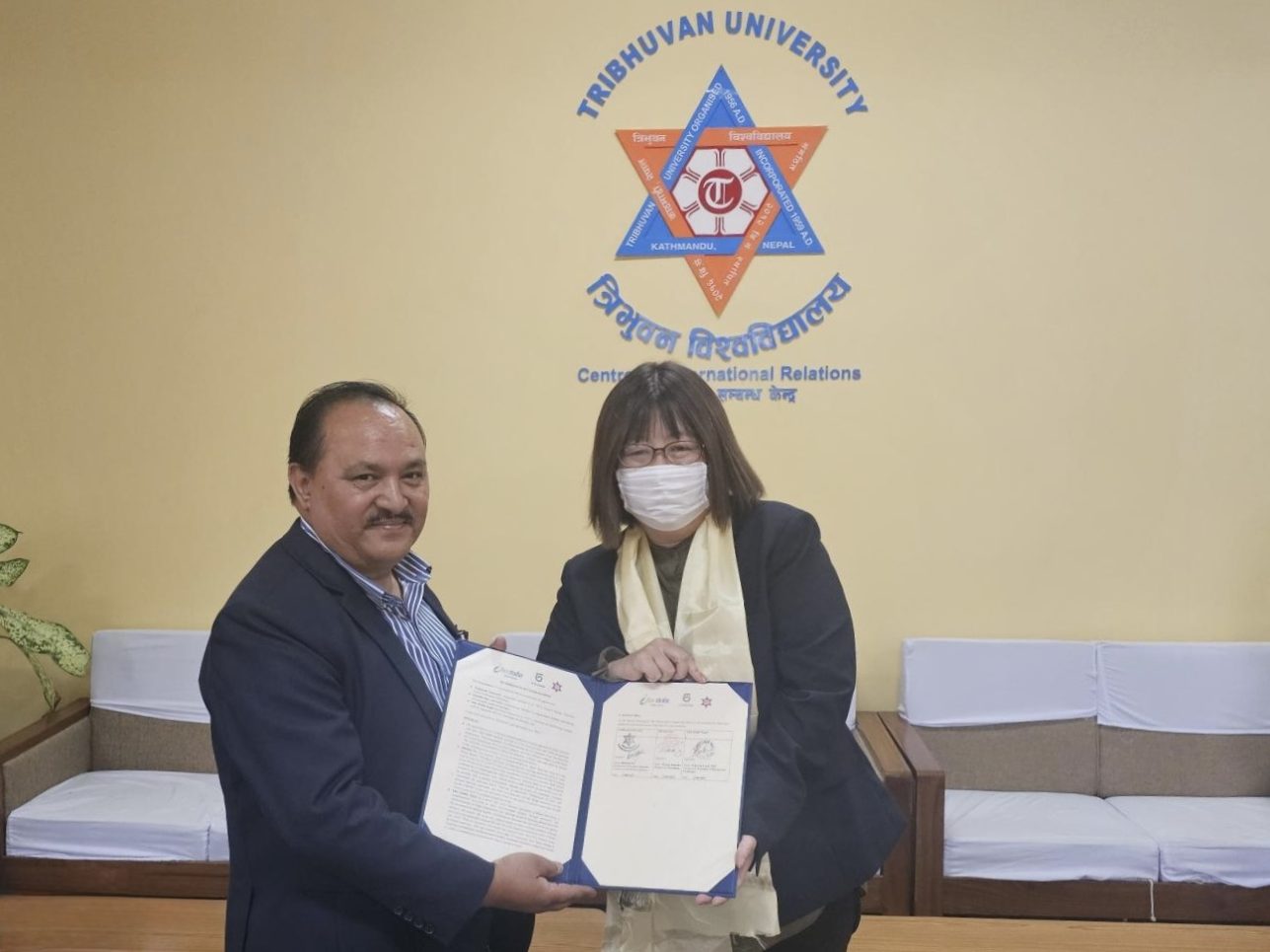
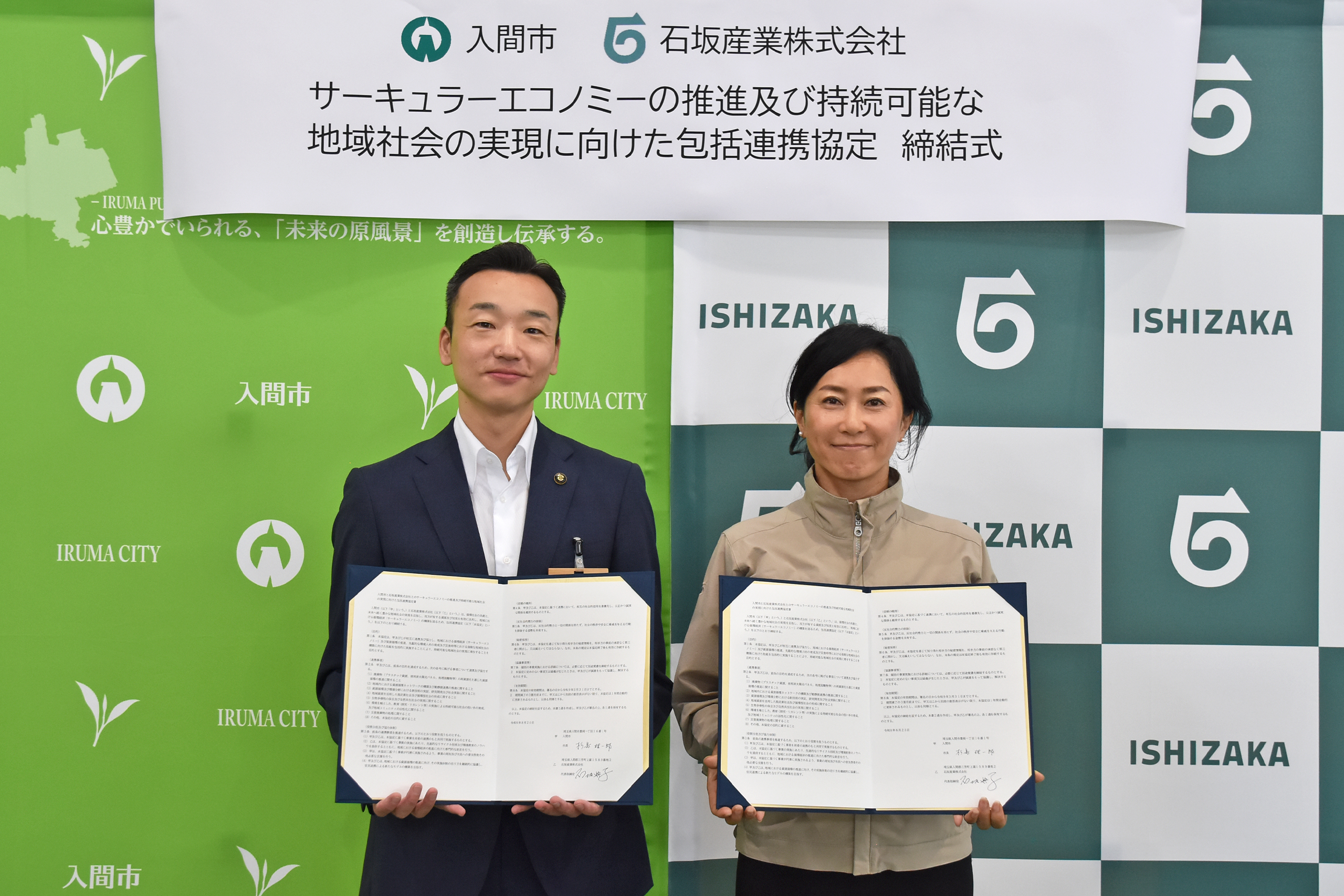
(Left)Binod Joshi, Former Executive Director of the Centre for International Relations, Tribhuvan University
(Right)Yumiko Endo, Executive Officer, President’s Office, Overseas New Business and Global HR, Ishizaka Inc.
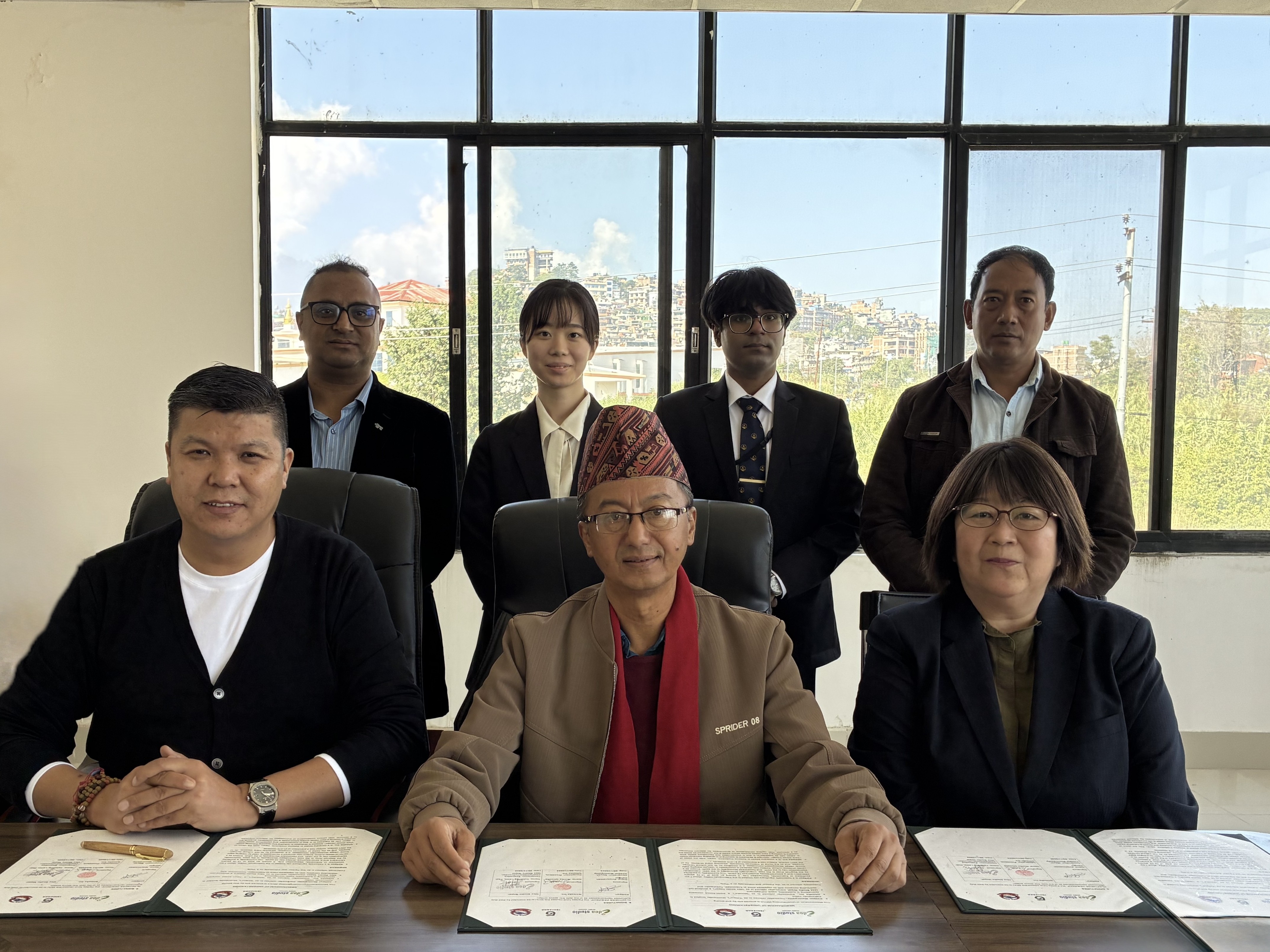
Front row(from left)
Dr. Tshering Lama, The Executive Chairperson and Co-founder, Idea Studio Nepal
Krishna Man Dangol, Mayor of Kirtipur Municipality
Yumiko Endo, Executive Officer, President’s Office, Overseas New Business and Global HR, Ishizaka Inc.
<Roles and Collaboration of Each Partner>
Idea Studio Nepal
With the aim of establishing Green Business with social impact at the core value, will initiate a joint venture with Ishizaka Inc. Japan and will strengthen its collaborative business framework by supporting the development of waste recycling plants and promoting partnerships with the Government of Nepal, local authorities, educational institutions, and private-sector stakeholders.
Tribhuvan University
To advance recycling technologies in Nepal, research and development activities will be conducted through the university’s Institutes and departments. These initiatives will be implemented under the “EEP (Expert Exchange Program)” (*4), a joint, knowledge creation, human resource development and expert exchange program involving four partner organizations. The program is designed to create a collaborative learning environment in which students and faculties participate in research and development, fieldwork, and community engagement, thereby fostering a proactive and shared commitment to effective waste management and Zero Waste Design.
Kirtipur Municipality
Kirtipur Municipality, through its administrative functions such as policy planning, community consensus-building, and enabling infrastructure development, will support the formation of collaborative frameworks and the strengthening of inter-municipalities partnerships, enabling the implementation and sustainable operation of waste recycling plants, to meet their aim of becoming a “Green&Clean City” of Nepal.
<“EEP”: The Core of Our Initiative>
This project will function as a research laboratory in collaboration with Tribhuvan University and will be driven by the EEP as its core.
・Efforts to Improve Household Waste Sorting Rates and Technical Verification for Solid Fuel Production
Through citizen-participatory “hands-on environmental education,” we aim to raise public awareness of waste sorting and improve the sorting rate of dry waste in households in partnership with the local government and the university. This will enable quality and technical verification to produce RPF (Refuse-Derived Fuel) (*5) in a high-quality, energy-efficient solid fuel comparable to coal.
・Development of “Circular Entrepreneurs” and Global Expansion
The initiative aims to nurture “Circular Entrepreneurs” (*6) capable of creating and leading circular – green business models in both Japan and Nepal. Through the EEP program implemented in Japan, individuals with a combination of technical expertise and environmental awareness will be nurtured, and by transferring this knowledge and experience back to Nepal, the initiative will support job creation and the development of sustainable career pathways in both countries.
・Job Creation and Sustainable Work Practices
Through the operation of waste recycling plants, safe and sustainable employment opportunities will be generated, along with improved and fulfilling work environments for local residents, applied knowledge for engineers and green business operators for management, everyone engaged in plants and indeed including those engaged in waste management activities.
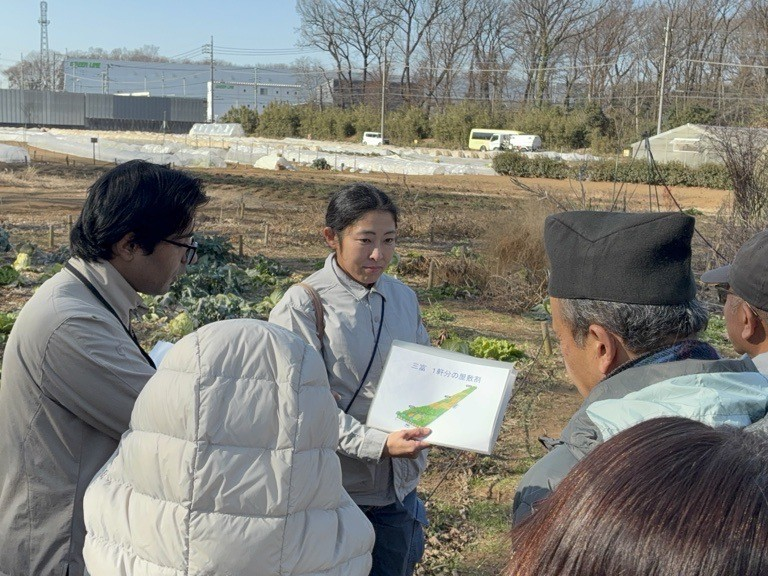
At the EEP workshop held at Ishizaka (January 2026)
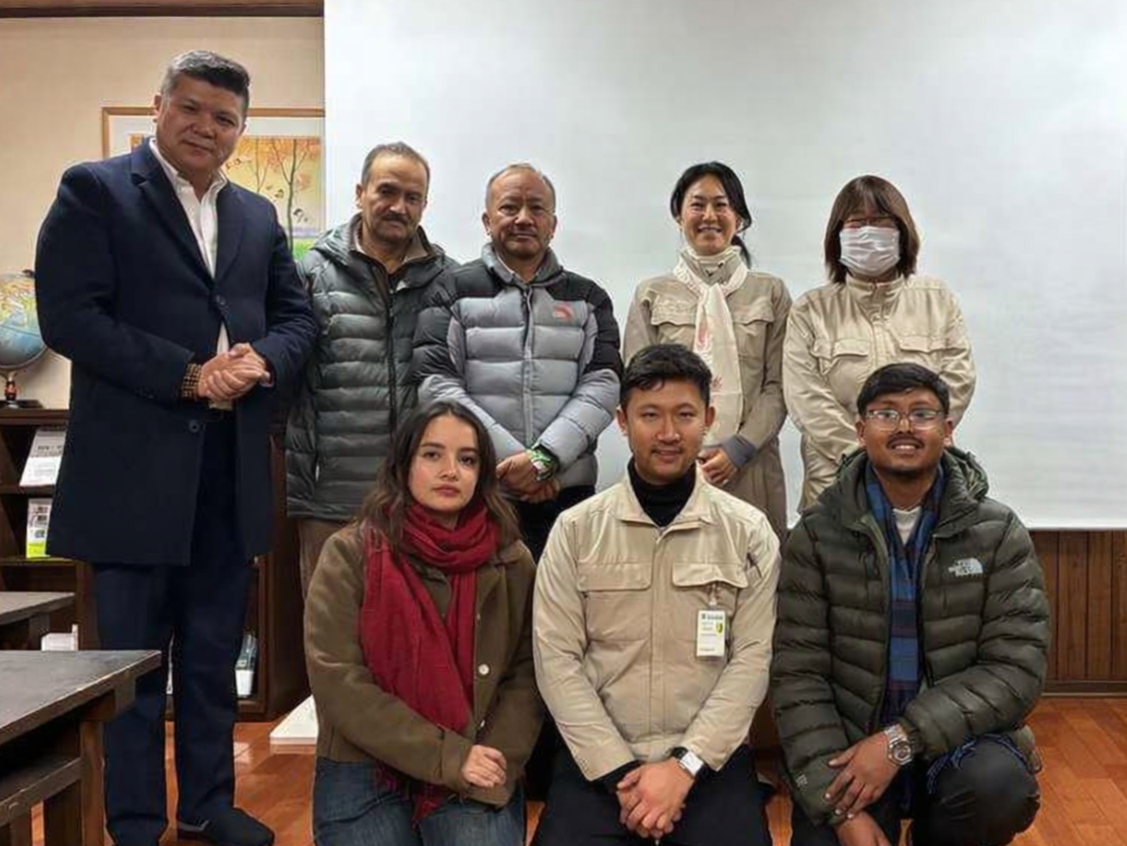
Back row(from left)
Dr. Tshering Lama, The Executive Chairperson and Co-founder, Idea Studio Nepal
Dr. Udhab Raj Khadka, Professor and Head of Central Department of Environmental Science, Tribhuvan University
Dr. Govinda Tamang, Director of School of Management, Tribhuvan University
Noriko Ishizaka, President, Ishizaka Inc.
Yumiko Endo, Executive Officer, President’s Office, Overseas New Business and Global HR, Ishizaka Inc.
The project will start with feasibility and Environmental Impact Assessment (EIA) study for the construction of a waste recycling plant in Kirtipur Municipality, Ishizaka and Idea Studio Nepal will implement its business foundation through industry-government-academia partnerships under the EEP initiative. The company will continue its efforts to establish a joint venture with ISN and, together with local partners and citizens committed to preserving Nepal’s natural environment, will work to realize a “society that does not leave waste as waste” and to create a sustainable cycle of “living in harmony with nature.”
*1) Tribhuvan University: Established in 1959 as Nepal’s first national university, Tribhuvan University consists of five institutes and four faculties under which it operates 40 major disciplines, 64 affiliated campuses and 1,053 affiliated colleges in various disciplines. It is the largest university in Nepal with a current enrollment of about 480,000 students. https://tu.edu.np/pages/about-us-2
*2) Kirtipur: A city located approximately 7 km southwest of the Kathmandu Metropolitan Area, with a population of 81,578 (as of the 2021 census). It is known as the home of Tribhuvan University, Nepal’s largest national university. The city is promoting waste management initiatives, including collaborative frameworks and infrastructure development support, to raise awareness of waste separation in households and reduce landfill rates.
*3) PPP (Public Private Partnership): A mechanism to make the government-led development and operation of public infrastructure and services more efficient and of higher quality through the cooperation of private companies. https://ppp.worldbank.org/public-private-partnership/applicable-all-sectors/about-public-private-partnerships
*4) EEP (Experts Exchange Program): A professional exchange program to acquire knowledge and skills through an internship and job program at Ishizaka Inc.
*5) RPF (Refuse Paper & Plastic Fuel): A high-quality solid fuel derived primarily from industrial waste paper and plastics. With a calorific value equivalent to coal or coke, it is recognized as a lower-carbon alternative that can help reduce CO₂ emissions.
*6) Circular Entrepreneur: Individuals who combine an entrepreneurial mindset, skillset and knowledge to focused on innovation and solving social challenges with the concept of resource and human circulation, and who create and lead circular businesses.

Facility Tour and Training Program
We offer factory tours throughout the year that are open to all visitors.Our programs include tours designed for adults, family-friendly tours for parents and children, as well as tours tailored for companies and organizations.We provide customized courses based on your needs, including the theme, budget, and available time.
Contact Us
For inquiries regarding media interview requests, or consultations about collaboration and partnerships, please contact us here.