

Leah Ditton visited Ishizaka Sangyo and shared her thoughts on the challenges of environmental change in the ocean.
Leah Deighton, a professional female captain who has solo-voyaged 150,000 nautical miles, equivalent to eight times around the world, visited our company and had a conversation with CEO Ishizaka. She shared valuable insights, from the practical issues of “environmental change” seen from the world’s oceans to a message for children.
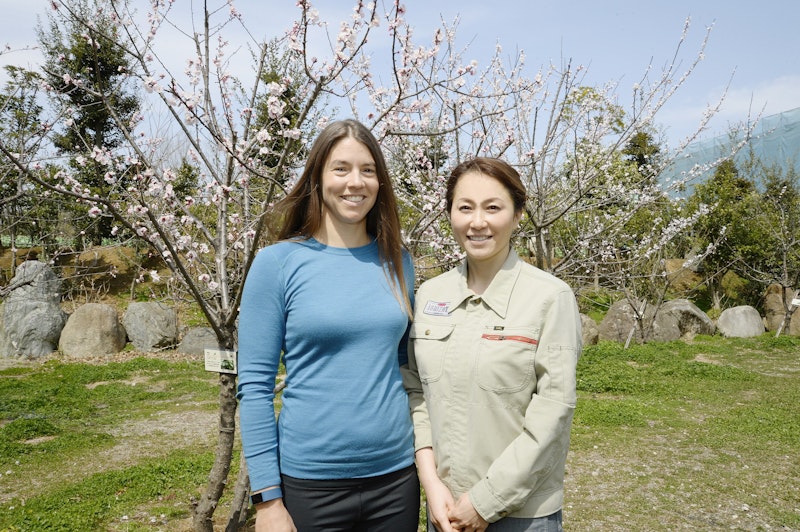
Leah Deighton is aiming to embark on a solo voyage from a port in the Kanto area of Japan to San Francisco, USA, around spring 2018. She came to Japan to do preliminary research, but as she is also active as a writer and speaker, she was intrigued by the fact that there is a place in Japan that provides environmental education in Satoyama, so she visited our company and had a discussion with Representative Ishizaka.
When sailing the world’s oceans, the sea is alive
I also had many strange experiences .
Ishizaka : First of all, I’m interested in your background and the environment you grew up in. What made you become such a free-spirited woman?
Leah: I was born in the heart of London, and my mother was a British national. She was a school teacher and later became a principal. We grew up in a strict household, but my grandparents were the kind of people who would try new things… After the war, they were the first people in our neighborhood to buy new things like cars, washing machines, and televisions. Perhaps that bloodline has influenced me.
Ishizaka: Where does the desire to sail solo around the world’s oceans come from?
When I was at Lea University, I traveled to Asia. India, Thailand, Malaysia… At that time, I met people from the port, who had crossed the sea from Cape Town and various other places. These people told me that you could earn money by becoming a yacht crew member. If you get the proper qualifications, you can be hired equally regardless of gender, so I became more and more absorbed in it and challenged myself to get qualifications. If I had continued doing that, I would have become what I am today.
Ishizaka: It’s all the things you’ve done and all the experiences you’ve had up until now that have made you who you are today.
With a strong competitive spirit, I challenged myself to obtain higher and higher qualifications. Whether or not I had a qualification would affect my salary and the situation I was in. It was a male-dominated society with many veterans in their 50s. In order to establish my position in such an environment, I needed to gain confidence by obtaining qualifications and become a full-fledged professional.
Ishizaka: What was your most memorable experience sailing the oceans of the world?
Leah has had many experiences, but if I had to pick one, it was when I was sailing the seas around the UK that I noticed a dolphin swimming in a strange way. Dolphins usually swim headfirst, but this time they were swimming sideways, in an awkward position, desperately, as if they were trying to appeal to me or send me a message. Thinking, “What’s this? That’s strange,” I looked at the nautical chart again and realized that if we continued on our current course we would run aground. Thanks to that, I was able to quickly change direction and was saved. It was a very memorable experience. I think of dolphins as sea dogs, like friends. For me, who travels the ocean alone, they are important friends. When I’m feeling lonely or depressed, they come over and stay with me for three or four hours. And strangely, it makes me feel better. I’ve crossed the ocean 15 times already, and while there used to be a lot of dolphins, I’ve noticed that I see them much less and less these days.
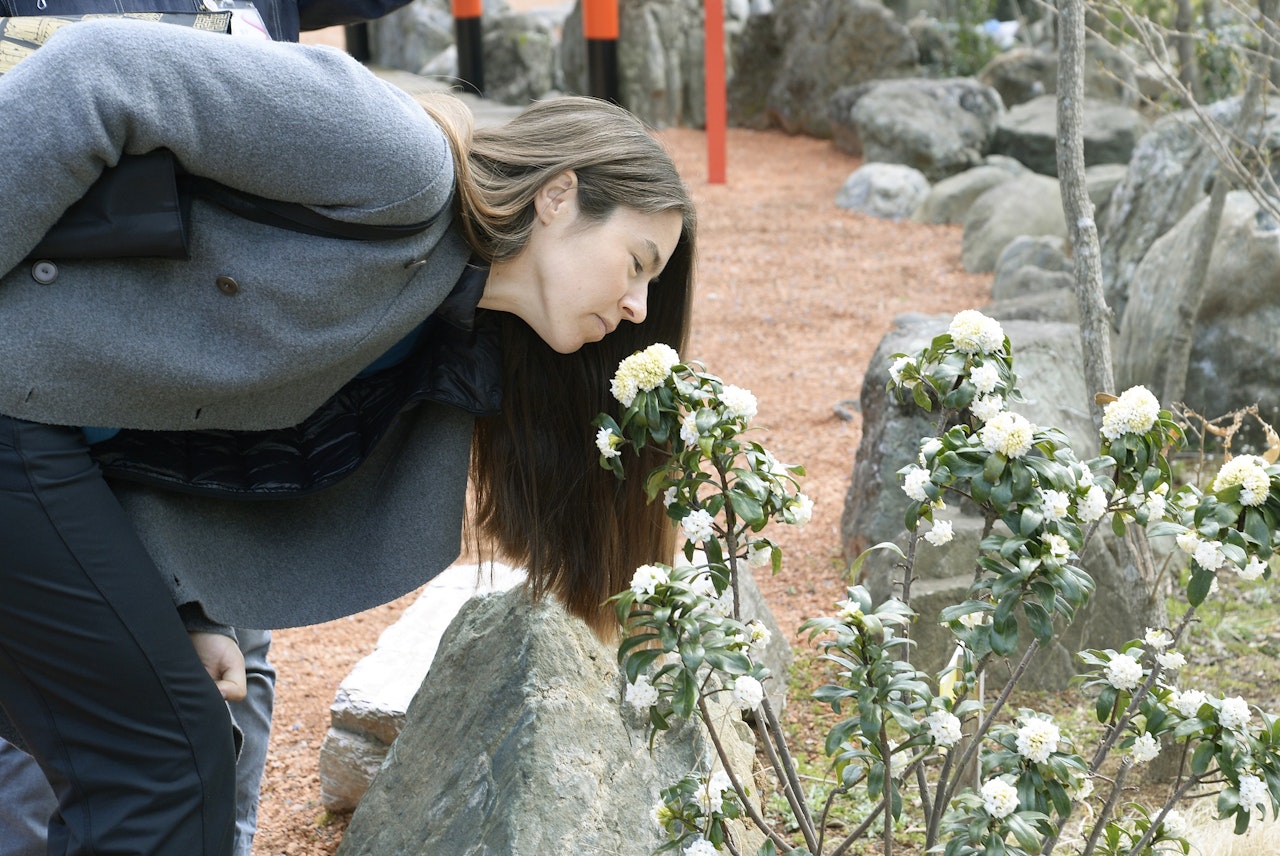
Ishizaka : Why are there so few dolphins?
I think the reason is that the environment of the Mediterranean Sea is changing rapidly. In some places, ship traffic has increased compared to before, so I feel that there are fewer places for dolphins to live. Conversely, in France, the overwhelming increase in dolphin populations in certain areas is a problem. I think it can be said that various factors, such as changes in the marine environment and ship traffic, are affecting marine life.
Ishizaka: It’s wonderful to be able to see the environment through the sea.
During the Lear voyage, we gather fish from the sea as food. One time, I caught a squid intending to eat it, but the other squid looked at my face and the captured squid several times before sinking to the bottom. Squids always move in pairs, so perhaps the squid sensed that its mate was gone… I remember this every time I eat fish. Experiences like this really make me realize that the sea is alive.
This was the first time I learned that Ishizaka squid move in pairs.
Leah: There are many other opportunities to learn which direction your boat should move by watching the movements of a school of fish. When the fish change angle, you learn that it’s better to go in that direction.
Ishizaka: It is said that in nature, animals can sense changes in their environment through their behavior, but when humans are released into nature, they are insensitive creatures.
It ‘s the same in the ocean. I’m saved by being taught by the fish and following their advice, and I’ve avoided accidents. I’m alone in the ocean, so I watch the fish’s movements very carefully.
Plastic littering the ocean!
In fact, humans are eating that plastic.
Ishizaka : Your five senses are sharpened. One of Ishizaka Sangyo’s slogans is “Living beautifully with nature,” and you’re someone who truly lives that philosophy. I think you’re a role model. Are there any symbolic episodes in terms of “changes in the marine environment”?
It’s rear plastic! There is so much plastic littering the ocean that it’s more visible than the waves. The reality is that a lot of plastic waste is being dumped from commercial fishing boats. It may seem like plastic is just there, but if you look closely, you’ll see that fish are eating the plastic, and then humans are eating those fish. I want to convey this reality. Basically, everyone knows what needs to be done.
But it’s not easy to do. Most of the things we need to do are things that people fear. Doing them can have economic consequences… But I think it’s necessary to face that fear.
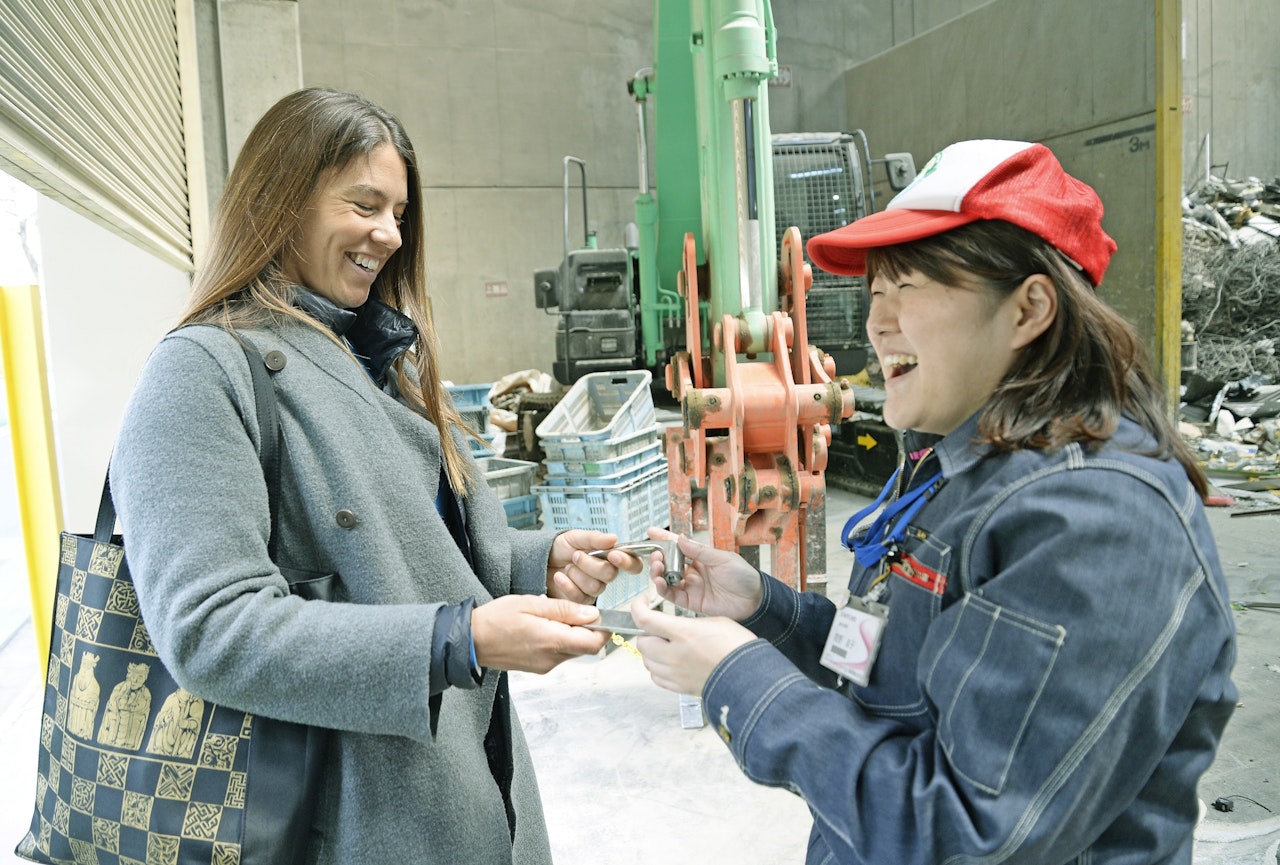
Ishizaka: I too see plastic as an issue. I would like to take part in a “bye-bye plastic” initiative, but I would also like to take part in a “bye-bye plastic” initiative in the ocean. What do you want to do in the future? Please let me know your future goals.
I want to inspire everyone. If you put your mind to it, you can do anything. You can even go to the moon. Whatever it is, I want to help people overcome fear and convey the message that it’s possible, in order to achieve their dreams and the things they want to do, and to make their goals come true. I sometimes give lectures, and after my speeches, women often come up to listen. They ask me, “How can I become like you? Tell me.” What I tell them then is, “Think about the worst-case scenario, imagine it, and try to accept that worst-case scenario.” If they do that, because that’s the worst-case scenario, there’s no problem after that. I tell them, “Just do it, you can do it.”
For children, wild dreams
I want to have it. I want to work to make that happen.
What message do you want to convey to children through Kai Ishizaka’s activities ?
Leah: I think that in the past, there were a lot of kids who had all kinds of dreams, like wanting to be a spaceship pilot or climbing a mountain that no one has ever climbed before. But now we can go into space and mountains have been conquered. I wonder what kind of crazy dreams children today can have. I want to work to help children have crazy dreams, and I want to tell them that it’s still possible to have big dreams.
Ishizaka: Do you have any opportunities to talk to your children specifically?
Leah will be creating educational materials for children this September. We plan to first create them in English and then translate them into various languages. Children can sometimes have barriers to their dreams due to their family background or financial situation, but I myself wasn’t born into a wealthy family. Still, with the help of many people, I was able to secure sponsors and create an environment of support. Rather than simply carrying out activities for sponsors, I’ve created a system that allows me to create various things from these activities and give back to everyone. I want to continue spreading the message that “anyone can have a dream and take action!”
Ishizaka : We would love to create an opportunity for you to speak to children at our company’s events and ask for your cooperation. Thank you for your valuable talk today.
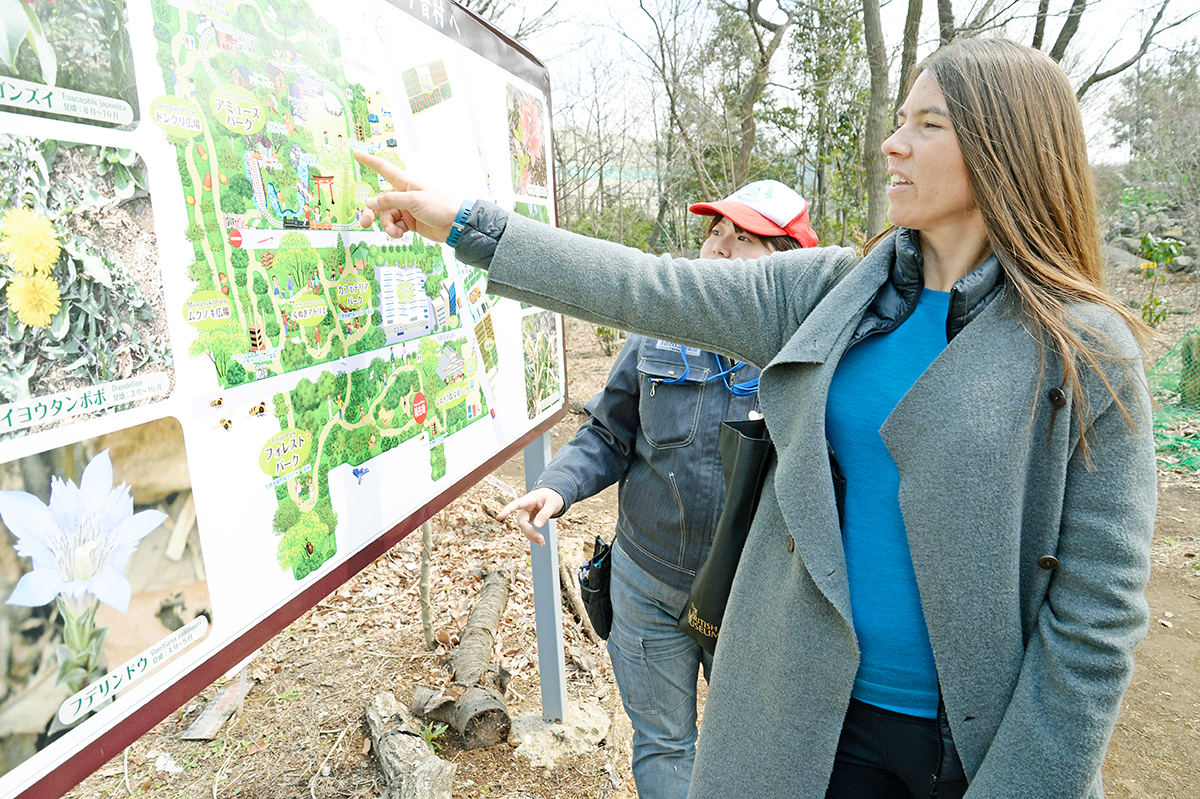
*1 Bye Bye Plastic (Back) is a movement started by two Balinese sisters who attend a “Green School” in Bali. The sisters were saddened by the sight of Bali’s beautiful scenery being polluted by plastic waste, and appealed to many people to “eliminate plastic bags.” After repeatedly speaking directly to the governor, he declared that plastic bags would be eliminated by 2018.
◇Leah Ditton/Profile
Lia Ditton (36 years old)
Originally from London, England, she is a professional female captain who has successfully sailed 150,000 nautical miles, equivalent to eight laps around the world. She has crossed the Pacific Ocean three times, the Indian Ocean twice, and the Atlantic Ocean nine times, three of which were solo. She placed second in the Route du Raume, France’s most prestigious single-handed transatlantic race. In the spring of 2018, she plans to depart from a port in the Kanto area of Japan and cross the Pacific Ocean to San Francisco, California, a voyage of approximately 5,500 nautical miles.

Facility Tour and Training Program
We offer factory tours throughout the year that are open to all visitors.Our programs include tours designed for adults, family-friendly tours for parents and children, as well as tours tailored for companies and organizations.We provide customized courses based on your needs, including the theme, budget, and available time.
Contact Us
For inquiries regarding industrial waste acceptance, media interview requests, or consultations about collaboration and partnerships, please contact us here.