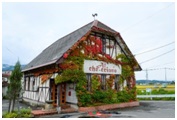
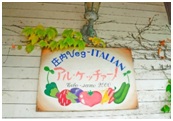
Representative Ishizaka visited the Italian restaurant “Archecciano” and had a conversation with Chef Masayuki Okuda.
We visited “Archecciano,” the restaurant of chef Masayuki Okuda, who continues to promote Satoyama food culture to Japan and the world by utilizing ingredients from the Shonai region.
Italian chef Masayuki Okuda is committed to using ingredients from his hometown of Shonai, and continues to offer menus that showcase the faces of the producers. In addition to shedding new light on Shonai ingredients through his Italian cooking techniques, he has also worked to expand sales channels for local ingredients through his work as a goodwill ambassador for “Shonai, the Food Capital.” We visited Chef Okuda’s restaurant, “Archecciano,” in Tsuruoka City, Yamagata Prefecture, to hear about his thoughts on local ingredients, what he values as a chef, and other topics that are important to the future of Ishizaka Industry.
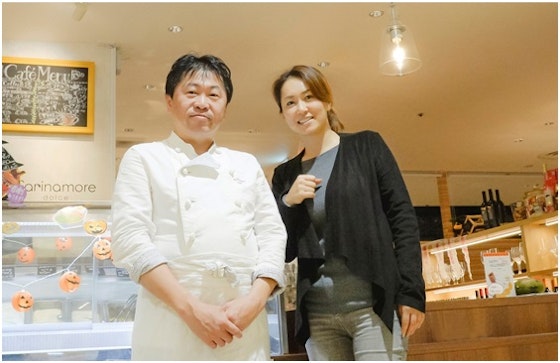
Ishizaka: Today, we’ve come to meet Chef Okuda Masayuki, who has elevated his hometown of Shonai to the status of a “food capital.” First of all, could you tell us why you are so committed to making the most of the abundant ingredients of the Shonai region and connecting with local producers?
Chef Okuda (hereafter, titles omitted): I’ll give you the answer first. If you study plants, you’ll understand that when you take plants that humans can eat from the mountains and fields, or when you cultivate and make them edible, they change from plants to vegetables. That’s why they’re written as “no no na” (no vegetables). Wild plants are the ones that didn’t come to the human world. The Earth is a world made up of various molecules, and Shonai is also one particle of the world. So, instead of imitating the world, I study what makes it unique in the world. Professional chefs prioritize delicious food, so they can import delicious ingredients from other places without worrying about local production and consumption. But in my case, I’ve been working with producers in Shonai since I was 31, making vegetables more delicious and enriching Shonai.
Ishizaka: How did you study? There were lots of photos of producers and their crops in the Archecciano store. Was that the starting point?
Okuda : For example, asparagus farmers know more than 10 times as much about asparagus as you can find in a book. So I learned about each vegetable by talking with them. As I learned more and more about them, studying their origins and other things, I began to understand that this is the best place in Shonai to grow asparagus, this is the best place to grow tomatoes, and so on. At the time, Nakajima Miyuki’s song “Chijyo no Hoshi” (Star on the Earth) was popular, and as the lyrics say, “Pegasus on the Plains” and “Subaru in the Wind,” I searched for them as if I was searching for myths, and I found so many producers popping up one after another, and we became friends (laughs). Whenever I went looking, I would always draw a bird’s-eye view of Shonai from above in my head, and I would pinpoint a place that would be perfect for tomatoes. And when I got there, there were tomato farmers there. There was a time when I would listen to that song while driving around looking for them.
Ishizaka : That’s amazing. You contact farmers as if searching for constellations. I met a farmer earlier, and what he said was truly eye-opening. The people of Shonai, who farm in dialogue with nature, don’t push themselves too hard, and don’t stray from nature. I thought that this is what it means to live as a human being.
Okuda: Humans are also part of the Earth and nature. However, humans are the only living creatures that are separated from the natural ecosystem. We use flush toilets, we are cremated when we die, and the food we eat is F1 seeds. We have become the only living creatures on Earth that are separated from the Earth. What I do is interpret the natural world, translate it into cuisine, and serve it to the public. I published a book on this topic called “Recipes for Regional Revitalization,” which reached number one on Amazon and sold out on the day it was released.
“Food Timetable” won the grand prize in the “Food Heritage” category of the world’s best cookbooks (laughs). Humanity will likely move towards thinking about how to live in nature and become people who are needed in the human world without causing trouble to the Earth.
I really felt that way when I met the Ishizaka farmers.
Okuda: People in Shonai have different values than people in Tokyo. Tokyo is an expensive place, so the value system is that those with money are happiest. In contrast, incomes in Shonai are low, but Tsuruoka, within Shonai, is the site of the castle of Lord Sakai, one of the Tokugawa Four Heavenly Kings during the Edo period. The lord lived a simple life to avoid the attention of the shogunate. Therefore, there’s an atmosphere that people shouldn’t live more wealthy than the lord, leading to different values. The idea of happiness isn’t based on money, but on bartering what you have, a culture of sharing that’s deeply rooted. In that sense, it’s truly rich. Tsuruoka is a snowy region with a rich rice paddy culture, and it’s impossible to survive alone. In winter, if a car falls off the side of the road, people will call a friend to help them, or they’ll go and help farmers plant rice. The basic principle is, “Get what you need, when you need it, and in the amount you need,” so people aren’t particularly obsessed with money. Also, people have strong connections with others, and they always come to your aid when you’re in trouble; someone to put your tire back on when it comes off, or someone to fix a leak when it’s leaking; the people and things you need when you need them are always within reach, and always there. True wealth lies in how many people like that you have among you. In cities, this involves money, so money has a high value. So urban wealth inevitably comes down to money, and information also comes with money.
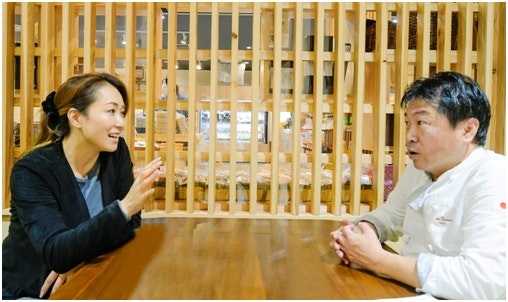
Ishizaka :So, does that mean you’re now giving back through your career as a chef? Your activities were an attempt to give back through cooking, taking what you’ve learned from the nature and farmers of Shonai.
Okuda: That’s right. It’s truly a way of giving back, so I’m putting my heart and body into this… I don’t really think of my body as being for my own benefit. My family used to run a drive-in, but they lost it all due to debt. At that time, the people of Tsuruoka in the Shonai region helped us out. Like the crane’s repayment of its kindness, I want to give back to Tsuruoka. When I opened my restaurant, they gave me a lot of ingredients for free for six months because they thought it would be difficult. When I went to thank them once the restaurant was doing well enough, they got angry and said, “I don’t need that!” After they scolded me, I thought about how I could give back to this land, and I decided that I wanted to enrich people’s lives by creating an environment where producers can grow delicious crops with peace of mind and have successors.
Tsuruoka City in Yamagata Prefecture was the last remaining feudal domain of the shogunate until the end of the Edo period, and was therefore shunned by the new Japan. If you look at the Shinkansen, you’ll see that this city is the only one left behind. In fact, it was home to the richest man of the Edo period, one of the Four Heavenly Kings of the Tokugawa shogunate, and the sacred mountain of Dewa Sanzan, making it a densely populated area. With such a rich place now shunned, I decided to use my own efforts to somehow open the door to its 140-year history. I wanted to make the local people famous, so I set out to find the “stars on earth” and worked to raise their incomes to a standard and increase the value of the agricultural products of the underprivileged Shonai region. This has now been achieved, with green onions and a brand called Shonai vegetables. The price of lamb has doubled. While not solely due to my own efforts, Yamagata Prefecture’s per capita income has risen from 40th to 32nd. I run many of my produce stores across the country because I wanted to expand the sales channels for these people’s agricultural products and enable them to earn more than a college graduate’s starting salary. By doing so, we can create successors. It was truly a way of giving back. And we did something that is just like what appears in Manga Nippon Mukashibanashi.
Ishizaka : It wasn’t just Okuda-san who called it that, but the Shonai region on the coast of Yamagata Prefecture has the keyword “delicious.” Why did you decide on that?
In 2002, Yamagata Prefecture experienced a problem with unregistered pesticides, which consistently made national headlines. Many producers discarded all their produce and some even committed suicide. This issue was reported on national news every day, and Yamagata products began to decline in sales. At that time, I decided to make Shonai the “food capital” and, as a “food capital,” to make Yamagata a “delicious Yamagata Prefecture.” In Shonai dialect, the phrases are, “I don’t think so, but what do you think?” (This is what I think, but what do you think?) or “I don’t think so, but what do you really think?” (I don’t think so, but what do you really think?). If someone is criticized, they’ll say, “I told you so!” (I told them so!). I told producers, “I’m going to risk my life to make Shonai the food capital, so please support me in my dream,” and they all supported me, saying, “Well said!” As a result, the city came to be known as the food capital, and more and more national slow food conferences and food festivals were held. Tsuruoka rose from fourth to first in the number of tourists in Yamagata, and Shonai Airport became the “Delicious Shonai Airport.” As momentum grew, Tsuruoka was selected as a UNESCO City of Gastronomy.
Ishizaka: What do you think about the theme ”The Future of Food” ? What are your thoughts on the future of food in Japan and the direction of food around the world?
Okuda: Everything is economically driven, so money comes first, and then we think about crops and other things. Of course, that’s important, but labor costs are going to be rising in the future, so even if you’re doing farm work, how do you make that work?
Ishizaka: Do you have any advice on revitalizing Satoyama by combining nature, food, and other elements?
I think there are many people in various regions who are struggling, so I would like to hear your thoughts.
Okuda: Tsuruoka City’s theory of happiness is a “culture of sharing.” You give what you have to others, and if they do something for you, you give what you have. For example, if you catch a lot of fish, you share it with others, and in return you get vegetables and rice. That’s the kind of culture it is. It’s not bound by money. This kind of theory of happiness should exist in every region and city. I hope that people will find it. When developing a tourist destination or revitalizing a region, I think it’s important to study the characteristics of each region and town carefully, and within that town’s own theory of happiness, if you can interact with cities and cooperate with people both nearby and in distant towns, helping each other out, I believe your town will become more prosperous.
Ishizaka: When I talk to people from Finland, I really feel that ultimately, what keeps people alive is their desire to be happy.
Okuda: I’ve been to many panel discussions and I’ve noticed that when the audience asked, “What does wealth mean to you?” none of the many supposedly successful people sitting next to me could answer. I thought, “Huh? None of them can answer that.” It means having what you need when you need it, having lots of friends who will help you, feeling needed among them, and being recognized as a person and an individual. Humans are social creatures, so friends are important. When you go to Italy, Italians brag about their towns. But in Japan, not many people brag about their own towns. Towns don’t have stories. When revitalizing regional areas, carefully reexamining the objects that exist in a town and the stories that have been passed down through time and space will help you understand the town’s original character and philosophy of happiness. In order to be happy, I think it’s important to consider what true wealth means, not just money.
Ishizaka: That makes perfect sense! So true. Your story is very inspiring. Surprisingly, not many people realize this. People tend to want a logical answer to this kind of question, but the answer is much simpler: we should look into the culture and identity of our hometowns. We need to be aware of our own strengths. There’s no point in trying so hard to imitate those around us.
Okuda: You keep saying “the world, the world,” but what I mean is that you are also part of the world; the world is made up of a collection of individual particles. This town, its people, and its vegetables are all part of the world. Italians talk about the entire history of their town. If you ask Japanese people, most of them know the history of Edo and Kyoto, but don’t know the history of their own town. French chefs in Japan also know the history and geography of France, but don’t know the history or prefectures of Japan. Japanese people like to look into the distance, so they don’t know much about what’s right in front of them.
Ishizaka: As someone who works in the environmental field, when I think about it, the problem of waste in the environment is the same, and it really comes back to education. We need to educate people properly and make them understand. Nothing will get done if we start arguing without understanding.
Okuda: During the New Year’s holidays, when the garbage collectors don’t come, the garbage piles up and it’s a real pain. Many people don’t appreciate it and take it for granted. It’s thanks to the people who take care of the garbage and clean the toilets that I can concentrate on cooking. I always say “thank you” to the person cleaning the toilets at the station and bow to them. It’s thanks to people like that that we can focus on one thing, study culture, and the town functions. Everyone seems to forget this, and it’s a bad habit of Japanese people to just keep trying to get higher and higher, and not look up if they think they’re above. And recently, gratitude has faded, and people have taken it for granted. We need to teach people that there are people of all kinds of professions, and that we have time to do what we love, live peacefully and safely, and that our cultural level is improving.
Ishizaka : It’s a matter of retrospective education; we need to look to the future while knowing the past, but because we only look to the future, we can’t create the future.
There’s a place called “Hakuba Village.” Young people and foreigners have moved there, and the village has chosen to abandon its culture. I thought it was revolutionary and unique, trying to incorporate new culture without clinging to the past. I think it’s
very important for people in each region to have the same mindset as Okuda-san, but how do you think it can be spread?
Okuda: I think this is also influenced by the fact that, unlike Tsuruoka, there was a time when many towns tried to become “Little Tokyo.” In my case, I have had young people come to Tsuruoka or speak at lectures, and young people who have resonated with me have come to my restaurant from Hokkaido to Okinawa to train. They then return to their hometowns. Some of them get married and stay in Tsuruoka. Having young people means that the area has a future, so it’s important.
Ishizaka: That is truly contributing to society. Mr. Okuda, your words “to make people into full-fledged professionals” are a way of imparting values. How would you like to convey to people what it means to be a craftsman and what kind of attitude they should have?
Okuda: First of all, the restaurant industry is a job where you “devote yourself to people, devote yourself to people, and more devote yourself to people.” It’s also surprising how the restaurant industry sets the trends of the times. When French cuisine becomes popular, herb culture comes along, followed by a wine boom, the French brand Chanel becomes popular, and the French pop-style of Yuming becomes popular. When Italian cuisine becomes popular, it becomes Prada and Armani, and F1 races, where Ferrari was so strong, are broadcast on TV… Scandinavian cuisine is booming right now, so Scandinavian furniture and flowers are all the rage. This is another example of how cuisine influences culture.
I want to convey that while chefs are sometimes looked down upon as a side job, it’s a very important job in the human world. Chefs are the only ones who can connect all living things on Earth. I tell my staff to work with that in mind. Every job in this world, whether it’s a politician’s mission or a chef’s, has a mission, and each person must understand the mission of their job. They don’t realize their own mission. They also have a destiny. People don’t know this, which is why they keep changing jobs. They don’t take pride in their work. That’s why, at my company, I clearly explain to everyone from the beginning that this is their mission and destiny. Before we talk about their rights, we need to properly teach them what their job is. Whether it’s Ichiro or anyone else, anyone who is considered top-notch has mastered the basics, like practicing batting swings. In cooking, the winners are those who have a wide range of experiences, who have cut more ingredients than anyone else, and who have endured many challenging situations. Only a handful of chefs are needed by many people and end up bartering. If you’re going to do it, aim for that. To achieve this, we teach them that they need to hone their interpersonal skills, be tolerant and able to forgive others, and be strong in competition.
Ishizaka: It’s wrong to say things without having a sense of mission.
This can be said for all professions. My last question is, what do you want to do in the future?
Okuda: All my dreams have come to an end, so I’ve turned to aspirations. I’m aiming to see how far a chef can contribute to revitalizing the local community and Japan as a whole. Right now, I feel like I’m sowing seeds for Japan’s future. When you sow seeds, they miraculously blossom and bear fruit. When I give lectures, elementary school children who empathize with my ideas come to work at my restaurant after graduating from high school. It’s very moving.
Ishizaka: There’s a ton to teach, like mindset. But if you start a job just because you think it’s great, it can fall apart completely. I think the most basic thing is to ask yourself, “Why do you want to do this job?”
There are still many issues that need to be addressed through food. Thank you very much for your valuable information and opinions.
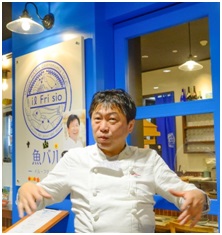
◇Masayuki Okuda: Profile
In 2000, he opened his own restaurant, Archecciano, and has continued to offer dishes where customers can see the faces of the producers. In 2004, he was appointed by the Yamagata Prefecture Shonai Branch Office as a Goodwill Ambassador for “Shonai, the Food Capital” to promote Shonai ingredients nationwide. Since then, the Shonai area has attracted attention from all quarters as a “delicious place,” and he is now spreading the ingredients and food culture of the Shonai region throughout Japan and the world.

Facility Tour and Training Program
We offer factory tours throughout the year that are open to all visitors.Our programs include tours designed for adults, family-friendly tours for parents and children, as well as tours tailored for companies and organizations.We provide customized courses based on your needs, including the theme, budget, and available time.
Contact Us
For inquiries regarding industrial waste acceptance, media interview requests, or consultations about collaboration and partnerships, please contact us here.