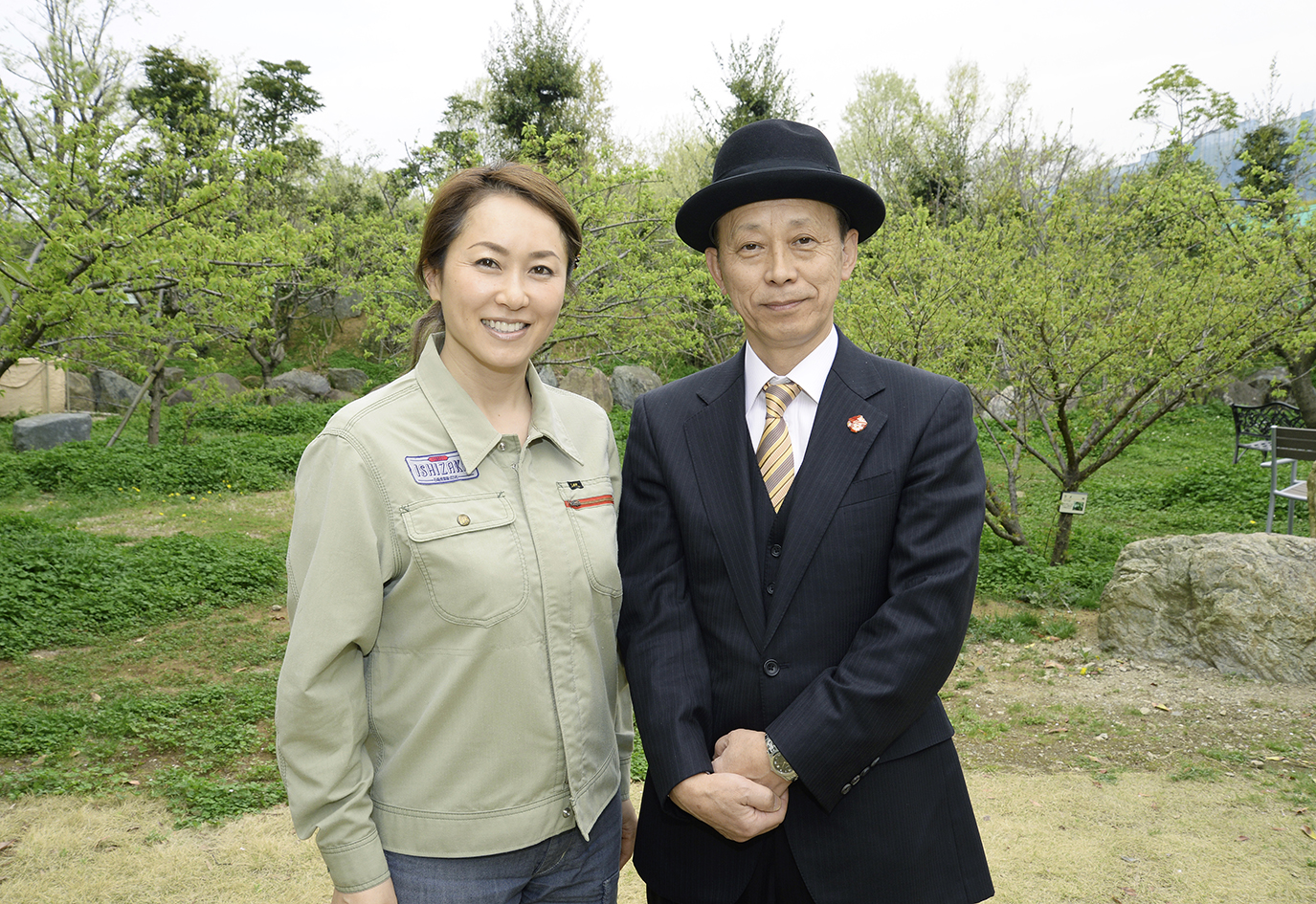
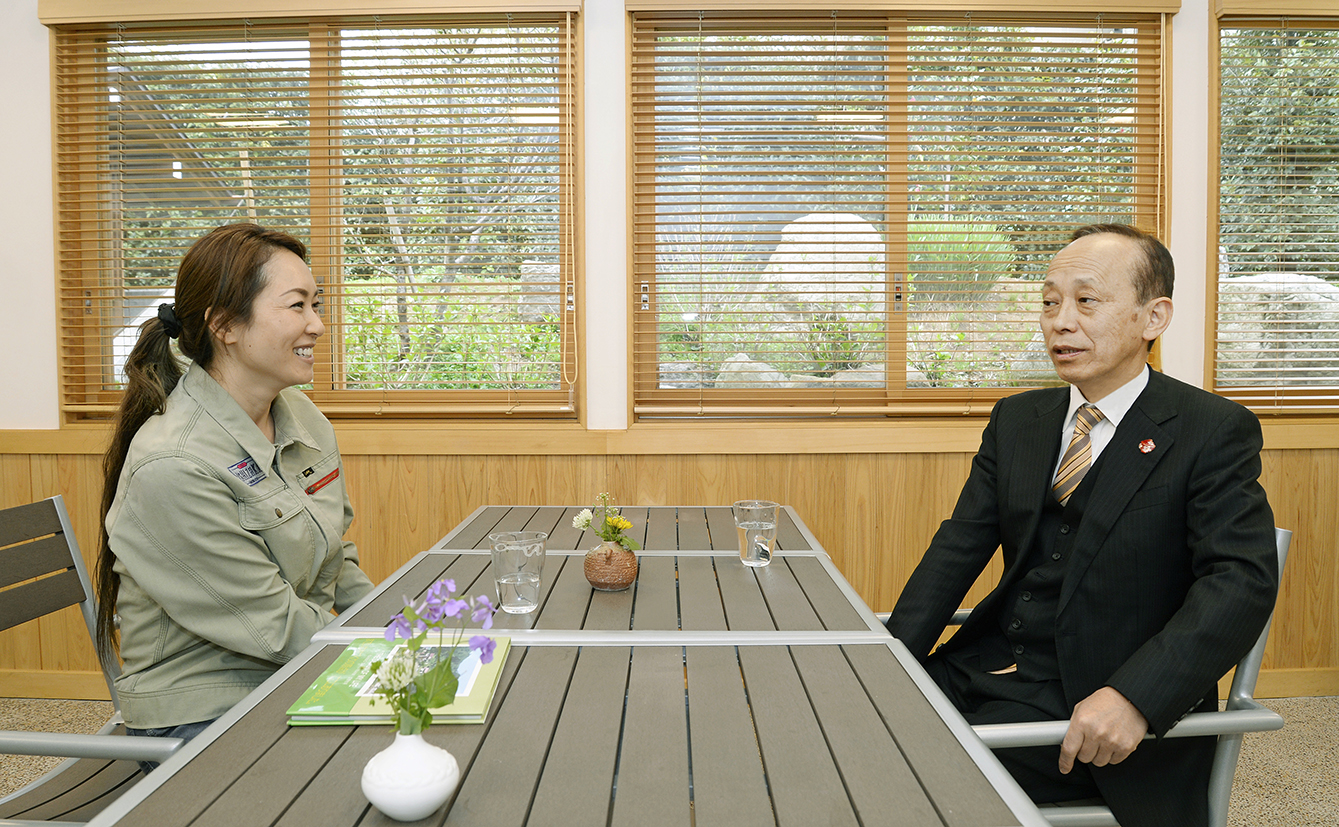
Umeo Kamikanda, principal of Shinjuku Culinary Institute, had a conversation with Representative Ishizaka.
A conversation between Umeo Kamikanda, a master of Japanese cuisine who currently leads the field of human resource development as the principal of Shinjuku Culinary Institute, and our company’s CEO, Ishizaka, was held at Kunugi Forest Communication Plaza. Principal Kamikanda, who has always pursued the essence of things, had a talk filled with memorable words that could serve as “life lessons,” making it a valuable opportunity to build a bridge between schools and companies in new endeavors.
Continually questioning the fundamental issue of “mindset”
is essential for developing people.
Kamikanda Principal Culinary Institute is a school for preparing students for a career in cooking, but it is also a place for “human education.” The goal of education is not just to have students obtain a national license. We continue to make efforts to thoroughly teach “greetings” as the first step in acquiring the humanity that will enable students to be recognized as full-fledged individuals when they enter society and become people who are loved by their seniors at work. First of all, we make it a practice for teachers to greet and speak to students before they do.
Ishizaka: At our company, we are working to ensure that each and every employee puts the “spirit of hospitality” into practice. The most important thing is the attitude of the mind. In other words, we place importance on thinking about why you are working and who you are doing the job for. To that end, and perhaps it’s the same in the culinary world, we start by having employees take good care of the tools they use. For example, we want them to have an attachment to even a single shovel, and to have the “attitude” to take good care of and clean it regularly.
Principal Kamikanda: Anyone who works as a craftsman must take good care of their tools. In the past, when chefs were looking for a job, they had to undergo a sort of interview called “Tool Appraisal.” By looking at the knife a person uses, you can tell everything about their ability as a craftsman and their mindset as a craftsman. Of course, it also requires good judgment on the part of the person looking.
Ishizaka: That’s certainly true. I once spoke with Daiwa House’s Chairman, Mr. Higuchi, and he told me that one of the things the founder did was look at the soles of his employees’ shoes. He believed that “sales activity is equal to the number of times you visit the site,” and he would praise the employee whose shoe soles were worn down the most. It seems that people who have mastered the essence of things always judge things by looking at their tools.
Principal Kamikanda: Living learning, or “katsugaku” (learning through active learning), is what we should value. That’s why we focus on instilling good habits in our education at school. This is something my mother taught me as well. “If you greet people first, they will bow in return. This will in turn foster a desire to wish them happiness.” That’s why I make sure my students greet people first, and if someone asks them something, they should respond in 0.2 seconds (laughs).
Ishizaka: I also feel there are issues with communication. Few people listen with their ears, but with their hearts. They just listen with their ears and pass it on. That’s why they don’t absorb what others say. I think the current situation in Japan is that such basic human education is necessary after people start working for a company. In Finland, with which we have connections in the environmental recycling business, they say that “once you enter university, you’re only given assignments from the company.” That’s how practical what you learn at university is. It even feels like there’s already a difference in the starting level at this point. From your experience, Professor Kamikanda, where do you think the ability to “listen with your heart” comes from?
Before Principal Kamikanda took over, I once gave a special home economics class at a junior high school, and I made miso soup. I explained to the students that rice water can be used as dashi and should not be thrown away, that food ingredients are made thanks to water, air, soil, and the sun, and that the crops that nature creates are the creations of God. I wanted them to understand the importance of being grateful for everything. We live in an age where the beauty of traditional home cooking is often forgotten and commercial cooking is all the rage, but the important thing is to say “itadakimasu” (thank you for the meal) and “gochisousama” (thank you for the meal). I believe that universal table manners are about “being grateful.”
Ishizaka: That’s right. Nowadays, the trend of teaching children at home is fading, and school education tends to focus solely on the “learning” part. We must not forget these manners. I would like to make sure that children who come to eat at our community plaza say “itadakimasu!” before eating (laughs). I think there is a common underlying theme to the issue of waste and loss. Before we say that garbage is dirty, it’s important to have the mindset to change the way we dispose of it. A sense of gratitude is essential in everything.
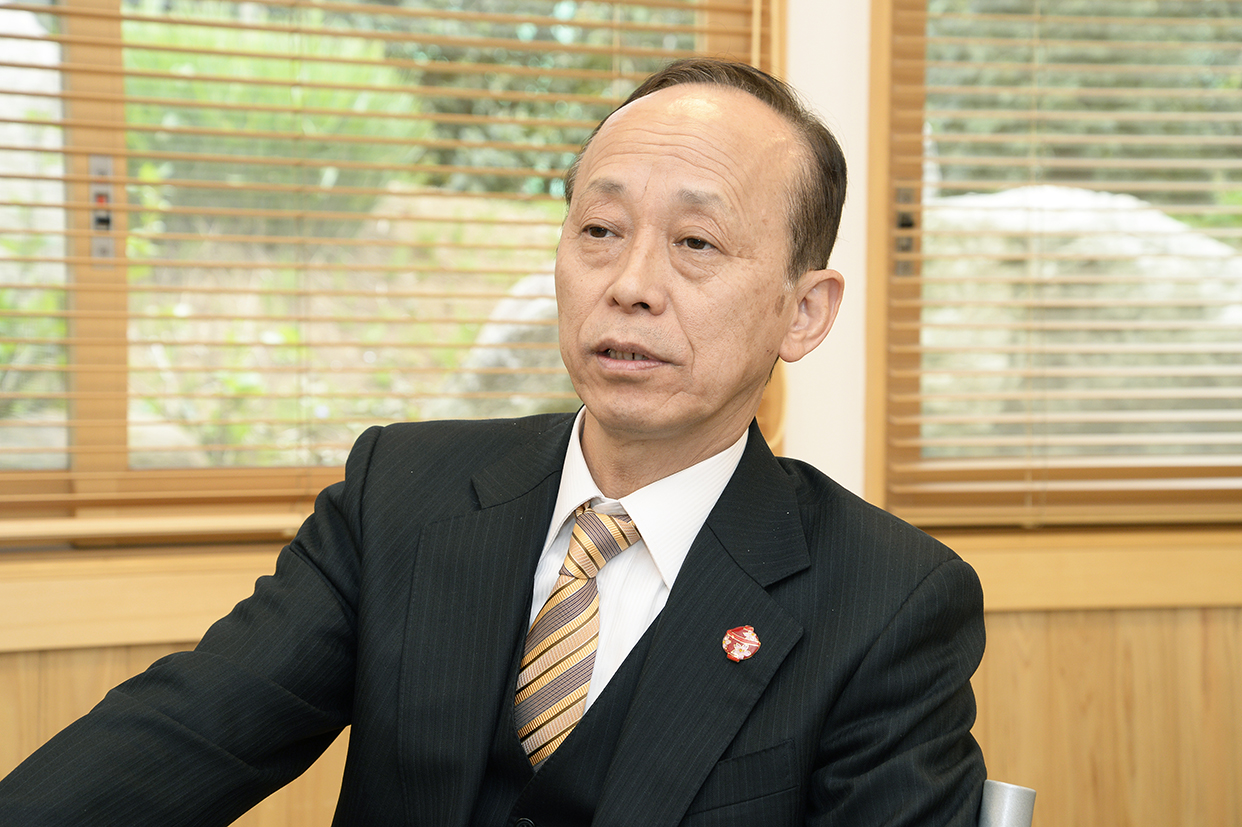
Principal Kamikanda: There are people in the world who can only afford one meal a day, but at the same time, there is also the reality that people leave piles of food at buffets and leave it uneaten. Even the food is expensive, and restaurants aim to be three-star restaurants. I feel that we need to address this trend as a national strategy.
I would like to see more and more young people use the stage of Satoyama
to have “experiences of awareness. ”
Principal Kamikanda: Our school has also introduced a practical class called “Agricultural Experience.” We believe that letting students experience the hard work that goes into producing ingredients and feeling gratitude and appreciation for the people who provide the vegetables they need for cooking will lead to “spiritual growth,” and we have been working on this. Could you please tell us again about the background and concept behind Ishizaka Sangyo’s activities that led to the conservation of satoyama and the utilization of forests?
Ishizaka: During our time as an industrial waste disposal company, we came to the realization that the only way to address the problems of littering and illegal dumping in local woodlands was to transform the forests themselves, which had become jungle-like. We also noticed the loss of biodiversity and wanted to revive the Musashino Forest that had existed since ancient times. We chose to manage the forest ourselves. From there, we started farming, and, although we were amateurs at first, we began working on organic farming and other projects. We wanted people to come and enjoy the forest and learn about this environment. We wanted to use the satoyama as a stage to inspire many people to think about the environment. Fortunately, satoyama conservation has created value beyond volunteer work, restoring the trust of landowners, bringing joy to children, and providing an opportunity to raise awareness of our business.
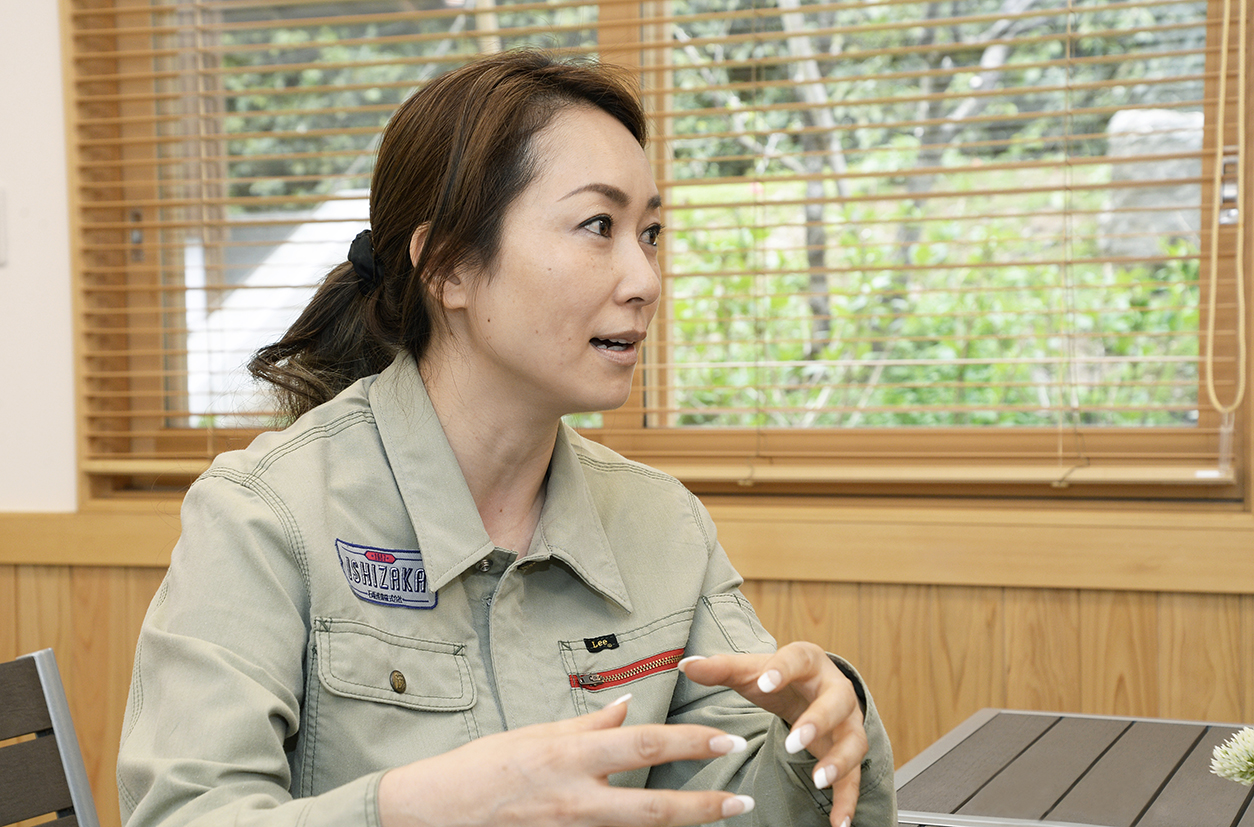
Principal Kamikanda : It’s said that if we deal with only human problems every day, everyone will end up with the same expression on their face. I sometimes feel that people who are in contact with nature and involved in manufacturing have a childlike expression. That just goes to show how important it is for humans to be in contact with the natural environment.
Ishizaka: That’s right. By sharpening your senses in nature, you can shift from the narrow perspective of an insect’s eye to the broad, bird’s eye view. You can sometimes discover things that you wouldn’t be able to see in your own field by going to a completely different field. In that sense, I would like the younger generation to make more use of this satoyama and have a variety of “experiences of awareness.” By doing so, I think we can see how to solve the fundamental problem of “what does it mean to be independent?” It’s not just about earning the money you need and becoming independent in life, but I think it helps you become aware of the senses necessary for true human independence, such as “Am I causing trouble to others?” and “What is the purpose of this job?”
It seems that new challenges can be taken on
through interactions between students aiming to enter the culinary world and children who come to play in the Satoyama area.
Principal Kamikanda: In order to support the areas affected by the Great East Japan Earthquake, we are also working as student volunteers and organizing soup kitchens, and there are more students wanting to participate than we expected. The desire to help others is also strong, even among the younger generation. Practical experiences such as volunteer work will help students grow as individuals, and we believe there are things we can do in collaboration with the Satoyama and farms here.
Ishizaka: Many children come to this satoyama to experience vegetable harvesting. For example, we could invite students aspiring to become chefs to join us in the vegetable harvest and have them work with the children on everything from harvesting in the fields to cooking with the vegetables they have picked. By having young people of the same generation talk and interact in the satoyama environment, they can gain confidence and overcome their weaknesses, and I think there is a lot to be gained from this opportunity to teach others.
I believe that for the students at Kamikanda Principal , it will be an important opportunity to gain experience in speaking and teaching others. For that day, I think it will be a valuable experience for them to take on the role of a master teacher and deal with the children responsibly.
Ishizaka: That’s right! I think it will be very meaningful for students to be involved in environmental education through cooking and act as teachers who convey their ideas to children. This opens up a new challenge: “Giving young people practical experience in a satoyama setting.” I hope that we can create opportunities for mutual growth and build a strong relationship of affinity. Thank you very much for sharing your valuable insights with us today.
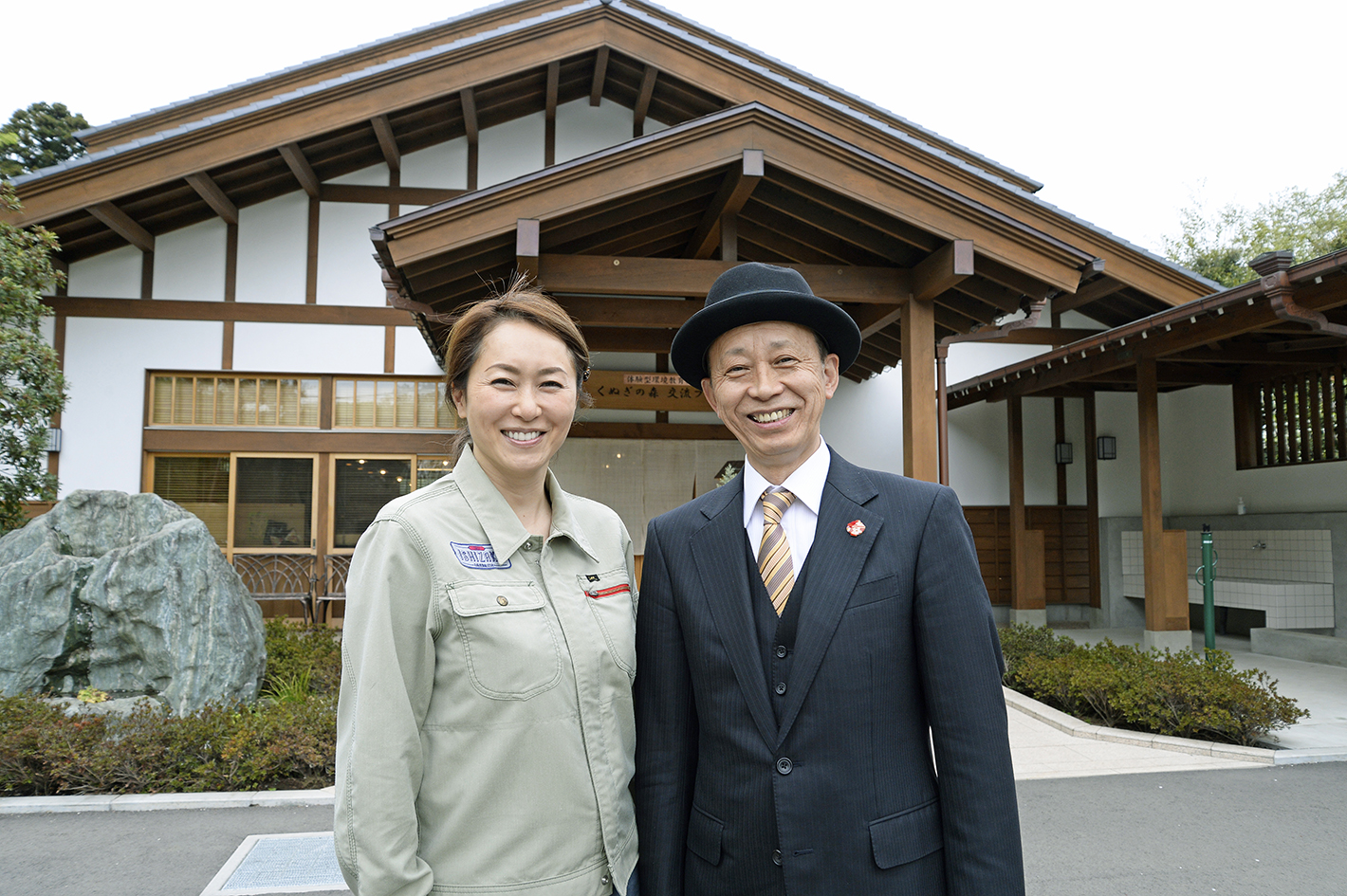
◇ Professor Umeo Kamikanda/Profile
Principal of Shinjuku Culinary Institute:
Starting as head chef at Ginza’s “Okame,” he served as head chef at numerous restaurants over the course of 24 years. 36 years after graduating, he was invited to serve as principal of his alma mater, Shinjuku Culinary Institute. Backed by his vast experience, he continues to lead the faculty with outstanding skills and insight, providing passionate instruction and education. The “Kappo Cooking Seminar” held at the school is always popular.
◎ Publications: He has published a collection of messages for young students, “To You Who Aim for a Life as a Chef.”

Facility Tour and Training Program
We offer factory tours throughout the year that are open to all visitors.Our programs include tours designed for adults, family-friendly tours for parents and children, as well as tours tailored for companies and organizations.We provide customized courses based on your needs, including the theme, budget, and available time.
Contact Us
For inquiries regarding industrial waste acceptance, media interview requests, or consultations about collaboration and partnerships, please contact us here.