Ishizaka Sangyo Co., Ltd. has recently obtained organic JAS certification for the agricultural products and processed foods of our farm, Ishizaka Farm.
Organic JAS certification is given to agricultural and forestry products that meet the quality and labeling standards set by the Minister of Agriculture, Forestry and Fisheries based on the Japanese Agricultural Standards.
In Japan, only vegetables that have received Organic JAS certification are recognized as “organic vegetables.”
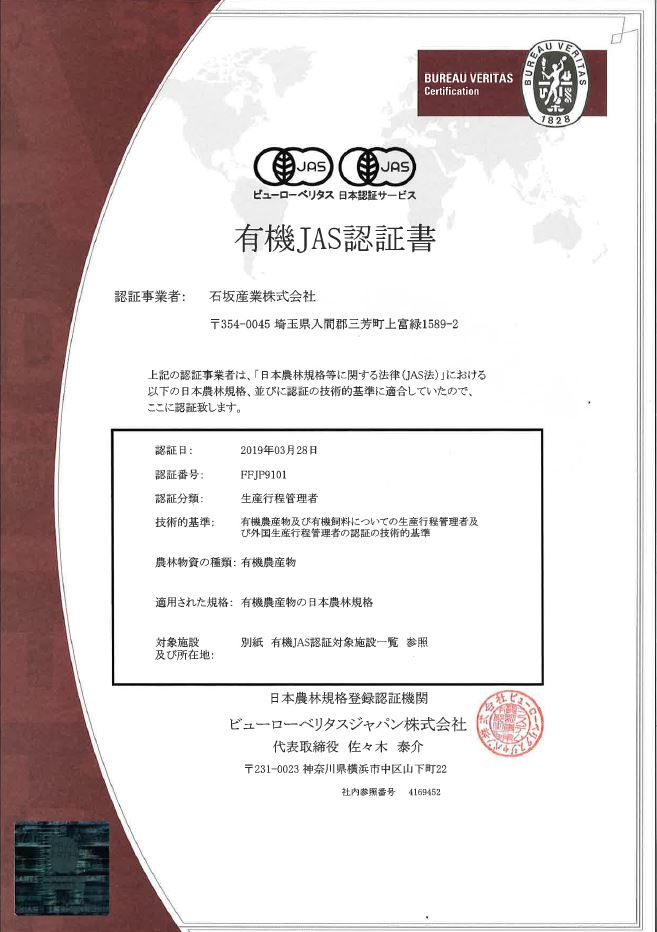
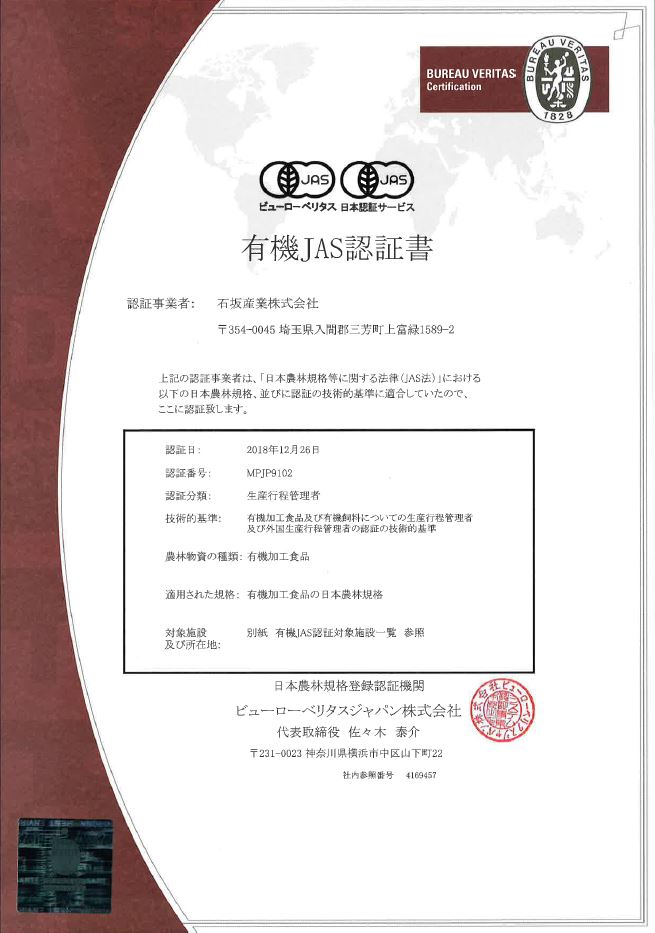
The Organic JAS sets detailed conditions for agricultural produce, including cultivation methods, manufacturing processes, distribution methods, product storage and management, and the appointment of a person in charge.
The JAS Law strictly defines the conditions that must be met, such as: – No prohibited pesticides or chemical fertilizers have been used in the soil of the field (field) for more than two years
– No prohibited pesticides or chemical fertilizers have been used during cultivation
– No genetically modified seeds
have been used.
Currently, it is said that only about 0.5% of domestic farmers are engaged in organic farming, and of those, only about one-third have obtained the Organic JAS certification (*).
Organic farming is not currently widespread in Japan because it requires time and effort as it does not allow the use of pesticides (herbicides, insecticides, etc.) or cheap chemical fertilizers.
Ishizaka Farm is committed to organic farming because, as a company that also engages in environmental education and Satoyama conservation, it
wants to pursue sustainable agriculture from a broad environmental perspective.
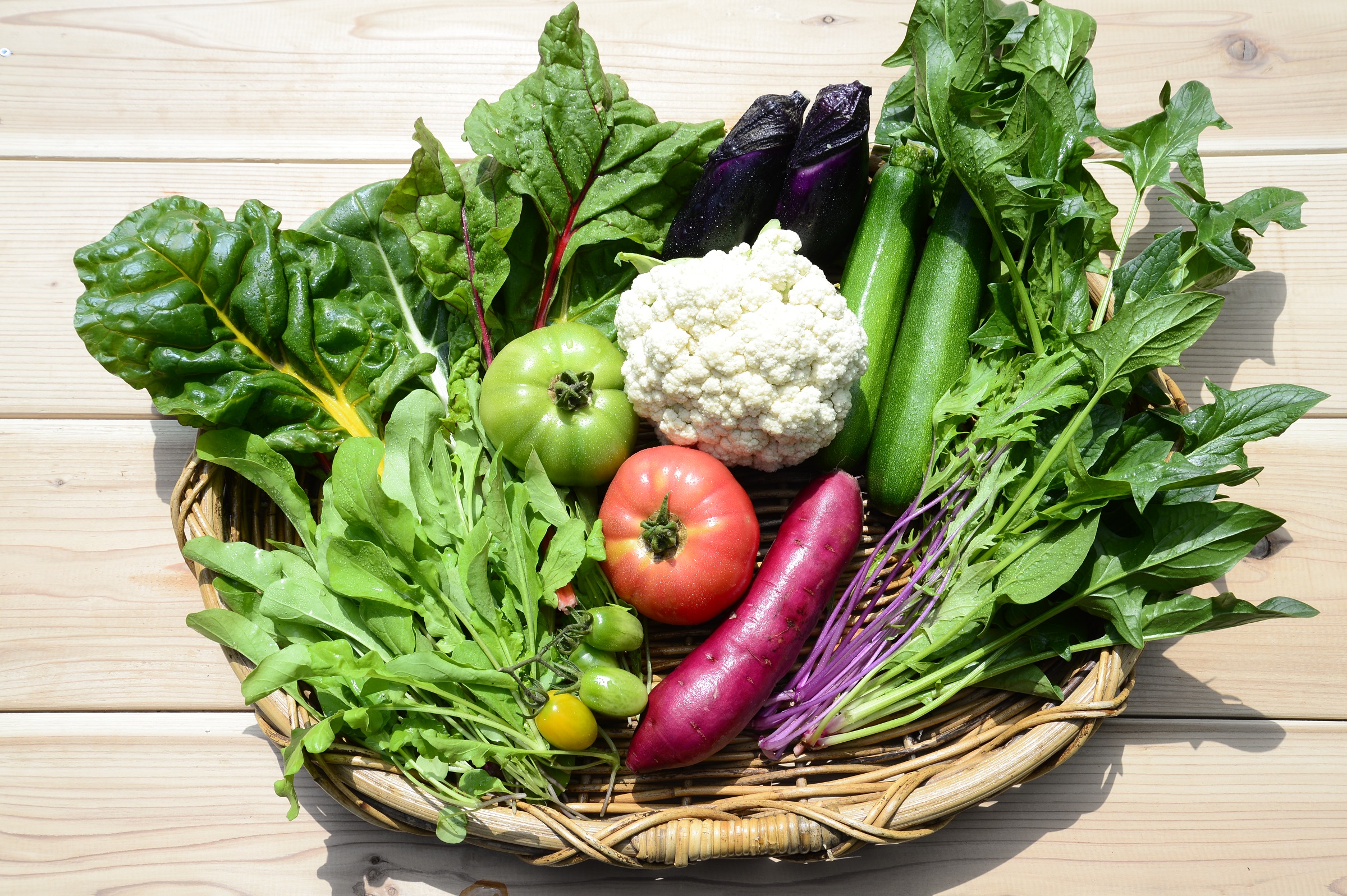
Ishizaka Farm has been practicing organic farming using “leaf compost farming,” which utilizes the power of the soil to cultivate crops without using any pesticides or chemical fertilizers, even those approved by the Organic JAS .
This is a traditional circular farming method that has been passed down in Mitomi, in which fallen leaves from the surrounding Satoyama are fermented to make compost, which is then used to improve the soil in the fields.

Ishizaka Farm also focuses on growing “indigenous vegetables.” Unlike
the “F1 varieties” (known as first-generation crosses, seeds artificially improved to allow for mass production and stable supply) commonly sold in supermarkets, “indigenous vegetables” are ordinary vegetable seeds that have adapted to the local climate and soil over a long period of time. Although they are
irregular in shape and size, they retain the natural flavor of vegetables, such as bitterness and astringency, and are unique vegetables that have taken root in the region.
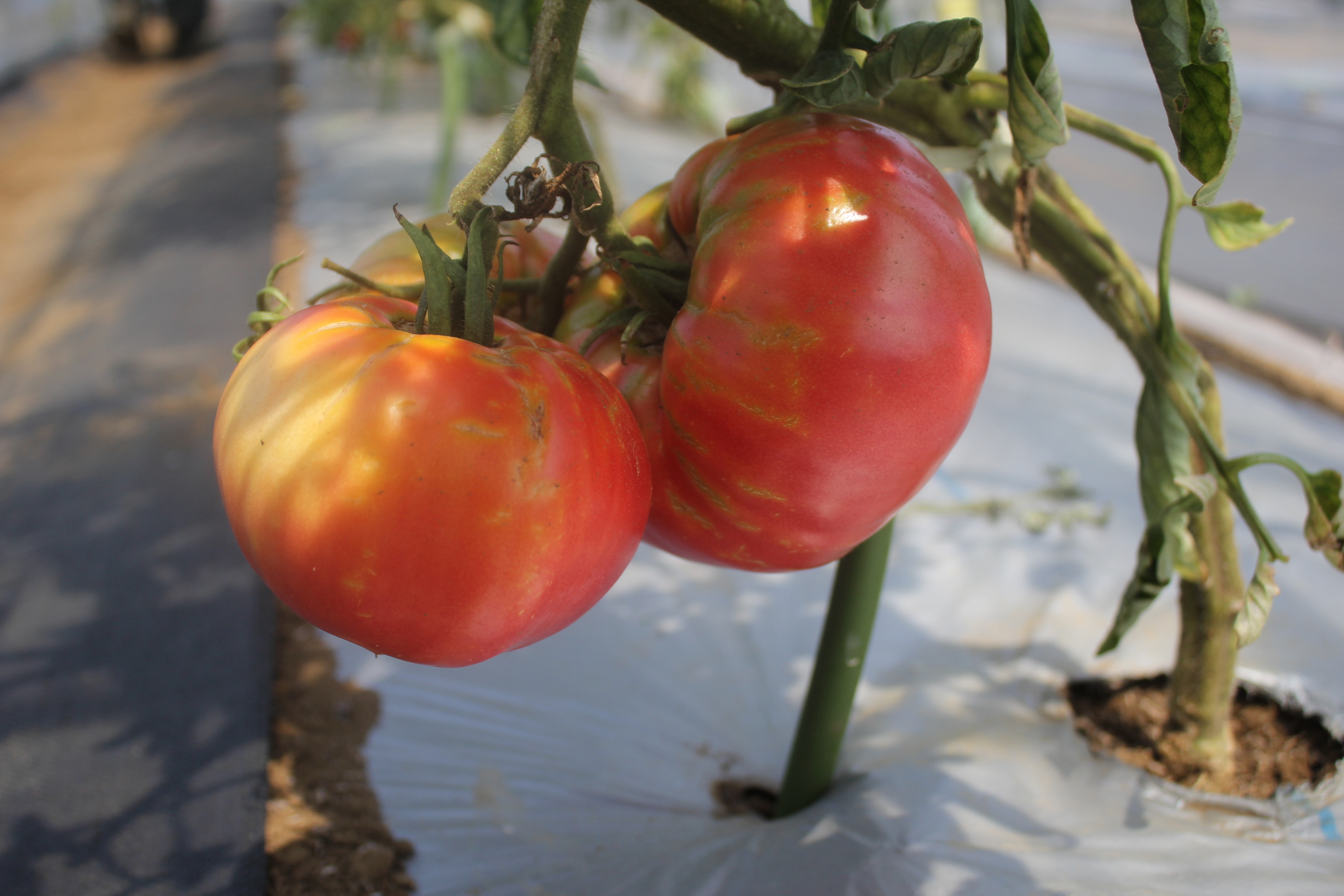
Ishizaka Farm aims to be an environmentally friendly farm, not only ensuring food safety but also minimizing the burden on the environment as much as possible.
Our company also obtained the international agricultural standard “GLOBAL GAP” in 2017, and Ishizaka Farm is an organic farm that meets global standards and has obtained GAP certification and organic JAS certification.
Through the efforts of Ishizaka Farm, we will continue to protect our limited environment and pursue the ideal style of agriculture for a sustainable society.
*From “Circumstances Surrounding Organic Farming” by the Agriculture and Environmental Protection Division, Production Bureau, Ministry of Agriculture, Forestry and Fisheries, 2019

Facility Tour and Training Program
We offer factory tours throughout the year that are open to all visitors.Our programs include tours designed for adults, family-friendly tours for parents and children, as well as tours tailored for companies and organizations.We provide customized courses based on your needs, including the theme, budget, and available time.
Contact Us
For inquiries regarding industrial waste acceptance, media interview requests, or consultations about collaboration and partnerships, please contact us here.